
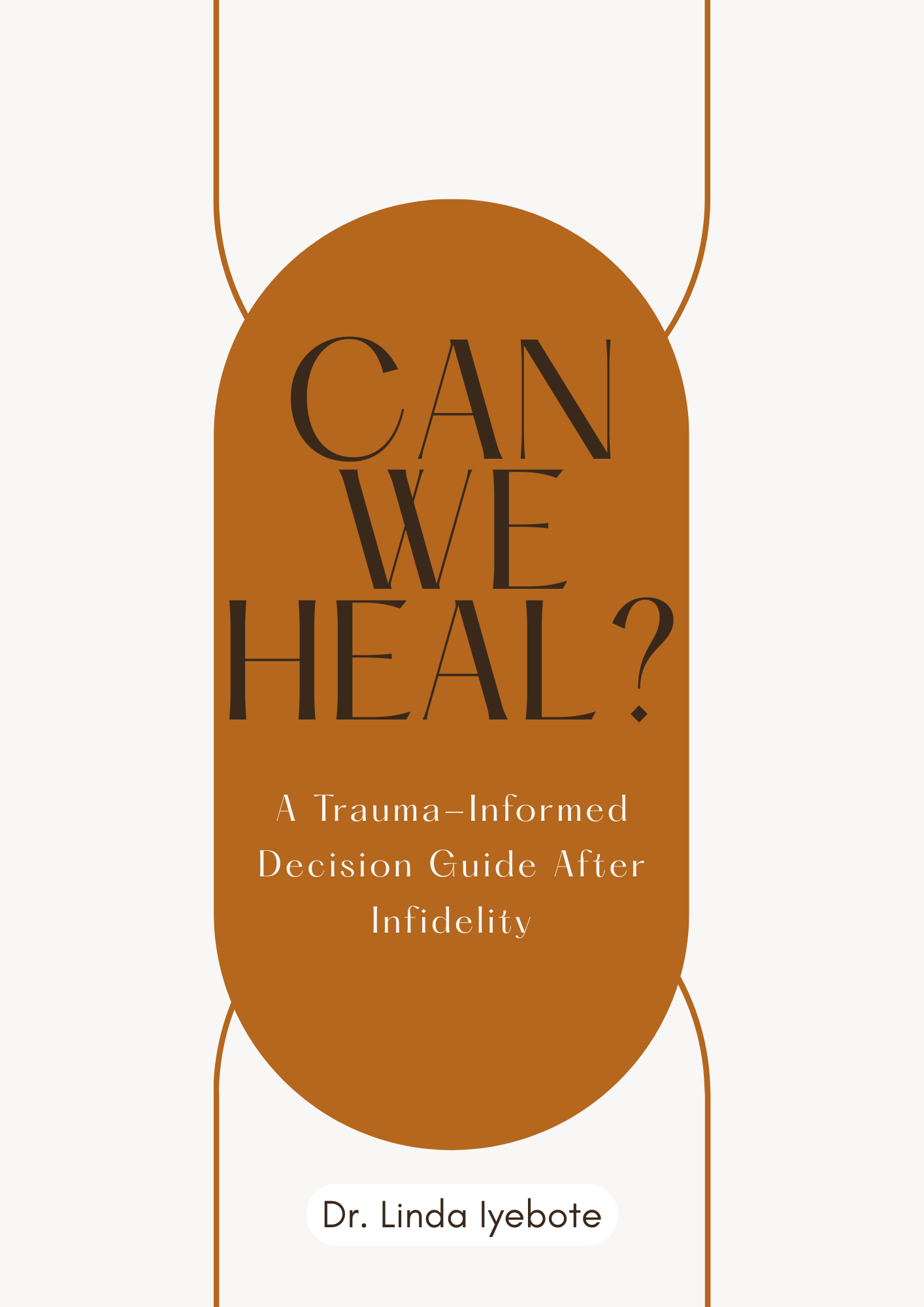
Can We Heal?: A Trauma-Informed Decision Guide After Infidelity
Can We Heal?
A Trauma-Informed Decision Guide After Infidelity
By Dr. Linda Iyebote, PhD, LCSW, LICSW, LCSW-C, CCTP
When Infidelity Shatters Certainty
After betrayal, many couples feel pressured to decide quickly:
Should we stay or leave?
Can this be repaired?
Am I weak for wanting to try or wrong for wanting out?
The problem is not that you don’t care enough. The problem is that clarity is being demanded while your nervous system is still in shock.
Can We Heal? was created for this exact moment.
What This Guide Is and What It Is Not
This guide is:
Trauma-informed and non-coercive
Grounded in clinical experience, not platitudes
Designed to reduce chaos before decisions are made
Respectful of all possible outcomes
This guide is not:
Therapy
A push toward reconciliation
A forgiveness mandate
A quick fix
Instead, it offers something far more essential: stabilization, clarity, and discernment—without pressure.
Who This Guide Is For
This guide is for you if:
You’ve experienced infidelity and feel emotionally overwhelmed
You’re unsure whether repair is possible or wise
You feel torn between staying, pausing, or leaving
You don’t want to be rushed by fear, guilt, or outside voices
You want clarity that does not require self-betrayal
You do not need to know what you want yet. You only need a willingness to slow the pace.
What You’ll Learn Inside
Can We Heal? walks you through five essential phases:
1. Stabilization Before Decision
Understand what betrayal trauma does to the nervous system and why clarity cannot be rushed.
2. Assessing Whether Repair Is Even Possible
Learn the difference between regret, remorse, and responsibility and what repair actually requires.
3. The Betrayed Partner’s Clarity
Explore the difference between wanting to stay and being afraid to leave, and what healing would truly cost you.
4. The Unfaithful Partner’s Work
Clarify what real accountability and emotional safety look like beyond apologies or promises.
5. Three Dignified Paths Forward
Repair. Pause. Separation. Each explained clearly, without judgment or pressure.
Throughout the guide, you’ll find:
Grounding reflections
Gentle assessments
Clear distinctions between safety, effort, and readiness
Why This Guide Is Different
Most affair-recovery resources assume the goal is reconciliation.
This guide does not.
It centers your nervous system, your agency, and your integrity—not the survival of the relationship at all costs.
Clarity itself is healing.
About the Author
Dr. Linda Iyebote is a licensed clinical social worker and psychologist specializing in couples counseling, betrayal trauma, and relational discernment. She works with individuals and couples navigating infidelity, emotional disconnection, and high-stakes relational transitions. Her approach is trauma-informed and attachment-based, with a focus on emotional safety, accountability, and stabilization before repair. Rather than assuming reconciliation as the goal, Dr. Iyebote prioritizes clarity, agency, and decisions made from steadiness rather than fear.
This guide was written to offer what many couples need before therapy begins: a place to slow down, stabilize, and decide without coercion.
What You’ll Receive
A professionally designed PDF guide (approx. 65 pages)
Trauma-informed reflections and exercises
Lifetime access after purchase
Immediate digital delivery
Important Note
This guide is educational in nature and does not replace therapy or crisis support. If there is ongoing abuse, danger, or risk of harm, please seek immediate professional or emergency assistance.
Ready to begin, gently
You don’t have to decide today. You don’t have to explain yourself. You don’t have to rush healing.
Can We Heal? offers a steady place to begin.
